





Incumbent water company v undertaker

The Water Bill Glossary: water terms was published by the Department for Environment, Food and Rural Affairs in November 2013. It defines the incumbent water company as ‘The water and/or sewerage undertaker that holds the de facto monopoly to provide services to premises in its area of appointment. It is also responsible for maintaining and operating the public water supply and/or sewerage systems. Although “insets” are also undertakers, the term “incumbent” does not include inset appointees for the purpose of describing the competitive market for providing services to new developments. However, inset appointees may be considered as incumbents in the context of the water supply and sewerage licensing regime because non-household customers will be eligible to switch suppliers in the reformed retail market’.
The term “incumbent water company” has taken the place of the term “undertaker” (also sometimes referred to as statutory undertaker), which is a term defined by the Water Bill Glossary as ‘A company who has statutory powers and duties to supply water and/or sewerage services to premises within an appointed geographical area under the Water Industry Act 1991. These are the incumbent water companies and inset appointees. The undertaker has complete control of the water supply and/or sewerage system in its appointment area. Licensees must therefore “use” their networks in order to serve or supply customers.’
There are both English and Welsh undertakers. An English undertaker is ‘an undertaker whose appointment area is wholly or mainly in England’ while a Welsh undertaker is ‘an undertaker whose appointment area is wholly or mainly in Wales.’ In both cases, undertakers are generally appointed on river basin catchments rather than political boundaries, so some English undertakers have appointment areas that extend into Wales while some Welsh undertakers have English customers.
See also: Statutory undertaker.
NB Water Bill, Glossary: water terms, published by the Department for Environment, Food and Rural Affairs in November 2013, describes the incumbent water company as: ‘The water and/or sewerage undertaker that holds the de facto monopoly to provide services to premises in its area of appointment. It is also responsible for maintaining and operating the public water supply and/or sewerage systems. Although “insets” are also undertakers, the term “incumbent” does not include inset appointees for the purpose of describing the competitive market for providing services to new developments. However, inset appointees may be considered as incumbents in the context of the water supply and sewerage licensing regime because non-household customers will be eligible to switch suppliers in the reformed retail market.’
Where an inset appointee or inset is: ‘A company that replaces the undertaker for a specific geographic area within the area of an existing undertaker. This usually happens where the customers are “unserved” (such as on a new development) or qualify as large users (i.e. they expect to use more than 50Ml in England or 250Ml in Wales – for example a paper mill). The inset regime is sometimes known as new appointments and variations (NAVs). However, the term “NAV” also refers to a variation of the appointment area of an incumbent water company, for example when incumbent water companies agree to change the boundaries between them.’
[edit] Related articles on Designing Buildings
- Drinking Water Inspectorate DWI.
- Ofwat.
- Statutory undertaker.
- Water company.
- Water consumption.
- Water Industry Act 1991.
- Water Industry Approved Plumbers Scheme WIAPS.
- Water Regulations Advisory Scheme WRAS.
- Water Supply (Water Fittings) Regulations 1999.
- Water transfers and interconnections.
- Water undertaker.
[edit] External references
- Department for Environment, Food and Rural Affairs, The Water Bill Glossary: water terms, November 2013.
Featured articles
Check out some of the best features and news from Designing Buildings as well as key stories from around the web.
The importance of early engagement

Construction lessons from the Trillium HealthWorks Experience Centre.
Mayors are to be given planning call in powers

Mayors across England will be able to make the most important planning decisions.

The Master Builder: William Butterfield and his times. Book review.

Why construction can't afford to ignore the skills gap.
Building Safety Regulator, 19 August

Gill Kernick appointed Independent Chair of Residents’ Panel.
Connecting knowledge, technology and conservation
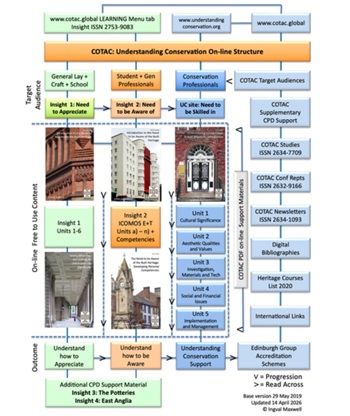
Building competence for the future of built heritage.
Building Regulations and Building Safety Act
CIOB publishes free advice for non-domestic clients.

Building Safety Newsletter from MHCLG.

An extraordinary record of steel engineering worldwide.

Households living near new pylons to save on bills.

ECA warns growth must not outpace grid capacity or skills.
The role of the client and decision making

CIOB response to built environment professions call for evidence.